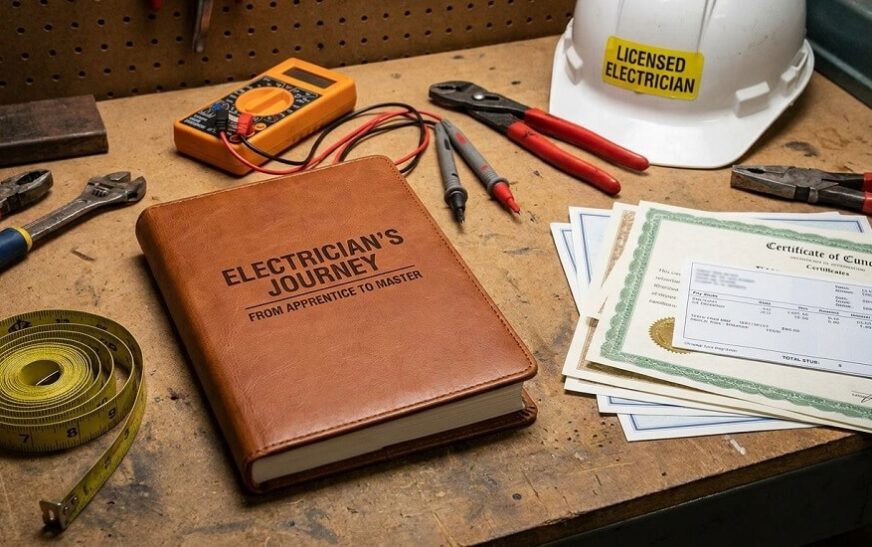

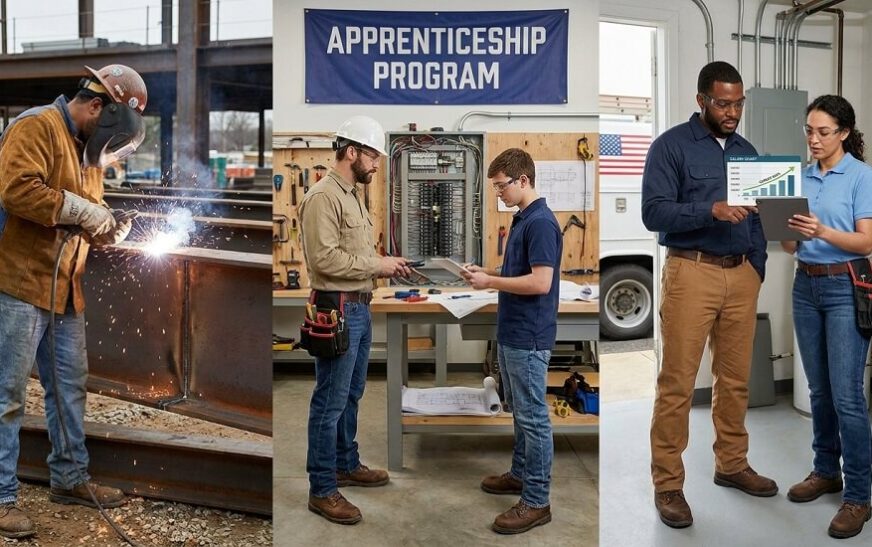
Skilled trades offer some of the most practical career paths in the U.S. economy for people who want to work with their hands, solve technical problems, operate equipment, build infrastructure, or maintain essential systems.
A skilled trades job in the USA can involve electrical systems, plumbing, HVAC, welding, construction, automotive repair, industrial machinery, elevators, utilities, telecommunications, and many other specialized occupations.
The appeal of a trade career extends beyond the ability to enter the workforce without a traditional four-year degree. Many skilled trades provide structured apprenticeships, paid on-the-job learning, nationally recognized credentials, opportunities for overtime, and pathways into supervision, contracting, business ownership, or specialized technical work.
The U.S. labor market also contains substantial replacement demand as experienced workers retire or move into other occupations. At the same time, some trade occupations are expanding because of construction, energy, infrastructure, advanced manufacturing, automation, and building-system upgrades.
This guide covers skilled trades jobs in the USA, trade career paths, skilled trades salaries, vocational careers, apprenticeships, trade school, union and non-union work, trade career ROI, occupational demand, and the most promising trades to enter in 2026.
What Are Skilled Trades?
Skilled trades are occupations that require specialized technical knowledge, practical ability, equipment skills, or occupational training.
Common categories include:
- Construction trades
- Electrical trades
- Mechanical trades
- Plumbing
- HVAC
- Welding
- Automotive
- Industrial maintenance
- Heavy equipment
- Manufacturing
- Utilities
- Telecommunications
- Energy
- Building inspection
Some trades require licenses or certifications, while others rely more heavily on employer training and experience.
What Is a Blue-Collar Career?
“Blue-collar” is a broad term traditionally associated with physical, technical, production, construction, maintenance, transportation, and other hands-on occupations.
Skilled trades are one important part of the blue-collar economy.
Modern trade careers can involve substantial technical knowledge, including
- Electrical systems
- Computerized controls
- Diagnostics
- Robotics
- Building automation
- Industrial machinery
- Digital measurement
- Safety systems
The distinction between physical and technical work is therefore increasingly blurred.
Why Consider a Trade Career?
Skilled trades can offer several advantages.
Shorter Training Paths
Many occupations can be entered through apprenticeships, technical programs, certificates, or employer training rather than a four-year degree.
Earn While You Learn
Registered Apprenticeships are designed as paid employment combined with related instruction, progressive wage increases, mentorship, and a portable credential.
Practical Experience
Workers develop skills through real-world projects instead of classroom study alone.
Career Mobility
Experienced tradespeople can move into:
- Lead roles
- Supervisory positions
- Inspection
- Estimating
- Project management
- Sales
- Training
- Entrepreneurship
Business Ownership
Some trades provide a route into independent contracting and small-business ownership.
Most In-Demand Trades in 2026
Demand varies by region and occupation, so “most in-demand” should be evaluated using both employment growth and annual job openings.
Promising areas include:
- Electricians
- HVAC technicians
- Plumbers
- Industrial machinery mechanics
- Welders
- Heavy equipment operators
- Automotive technicians
- Elevator installers and repairers
- Power-line workers
- Telecommunications technicians
- Wind turbine technicians
- Solar installers
- Specialized maintenance technicians
Renewable-energy occupations stand out for projected growth. BLS projects wind-turbine service technician employment to grow about 50% from 2024 to 2034 and solar photovoltaic installer employment to grow about 42%.
At the same time, larger occupations such as electricians and HVAC technicians can generate many more total openings because of their much larger employment bases.
Skilled Trades Salary
Trade pay varies by:
- Occupation
- Experience
- Geographic market
- Industry
- Licensing
- Union status
- Overtime
- Shift
- Specialization
- Self-employment
Median annual wages can range from relatively modest entry-level earnings to six-figure income for experienced specialists, supervisors, business owners, and workers in high-demand or high-risk environments.
The biggest mistake is comparing trades only by advertised starting pay.
A better analysis considers the following:
Starting wage + training cost + overtime + benefits + wage progression + licensing + long-term earning potential
Trade Job Market 2026
The U.S. trade market is being influenced by several long-term forces.
These include:
- Worker retirements
- Construction activity
- Infrastructure investment
- Manufacturing expansion
- Energy transition
- Building-system upgrades
- Industrial automation
- Data-center construction
- Housing demand
- Equipment maintenance
BLS projects total U.S. employment to grow about 3.1% from 2024 to 2034, but individual trade occupations can grow much faster or experience strong replacement demand.
This means the best opportunity may not be the occupation with the highest percentage growth. A large trade with modest growth can produce many more actual openings.
Skilled Trades Shortage USA
The U.S. skilled-trades workforce faces an ongoing challenge: employers need experienced workers, while many occupations have aging workforces and significant replacement needs.
Shortages can be particularly visible when employers need workers who already possess:
- Journeyman-level skills
- Specialized licenses
- Industrial experience
- Supervisory capability
- Safety certifications
- Advanced troubleshooting ability
The practical implication for new workers is important.
Someone entering an apprenticeship today is not competing only for today’s jobs. They are building skills for a market where experienced tradespeople may become increasingly valuable.
Trade Career vs College ROI
The trade-versus-college decision should not be framed as “college good” or “college bad.”
Different career paths involve different combinations of:
- Education cost
- Training time
- Starting income
- Wage progression
- Benefits
- Debt
- Geographic mobility
- Business ownership
- Career flexibility
| Trade Path | Four-Year College Path |
| Often shorter training | Longer academic preparation |
| Apprenticeships can provide wages | Tuition and living costs may be higher |
| Practical learning | Academic specialization |
| Some occupations require licensing | A degree may be required |
| Can lead to contracting business | Can lead to professional careers |
| Strong fit for technical hands-on work | Strong fit for academic/professional careers |
The best choice depends on the occupation, individual strengths, and financial circumstances.
Trade School Cost Comparison
Trade school costs vary by
- Program
- School
- Location
- Equipment
- Program length
- Credential
- Financial aid
A short technical program can cost substantially less than a four-year degree, but students should compare the total cost to become employable, not just tuition.
Consider:
- Tuition
- Tools
- Books
- Transportation
- Certification fees
- Licensing
- Lost income
- Housing
An apprenticeship can have a different financial profile because the worker earns while training.
Apprenticeship vs Trade School
| Apprenticeship | Trade School |
| Paid employment | Primarily education |
| On-the-job training | Classroom and lab |
| Progressive wages | Tuition cost |
| Employer mentorship | Instructor-led learning |
| Industry experience | Structured technical foundation |
| Credential after completion | Certificate or diploma depending on program |
Some professionals use both.
For example, an aspiring electrician may complete technical coursework before entering an apprenticeship.
Registered Apprenticeship Trades
Registered Apprenticeships are structured pathways where participants receive paid work experience, related instruction, mentorship, progressive wage increases, and a portable credential.
Potential trade occupations include the following:
- Electrician
- Plumber
- Pipefitter
- HVAC technician
- Ironworker
- Carpenter
- Sheet-metal worker
- Machinist
- Maintenance technician
- Utility worker
Registered programs may be sponsored by:
- Employers
- Labor organizations
- Industry groups
- Joint apprenticeship committees
- Community organizations
How to Become a Skilled Trades Apprentice
A common process is:
- Identify a trade.
- Research local apprenticeship programs.
- Check entry requirements.
- Apply with the employer or sponsor.
- Complete required testing or interviews.
- Begin paid training.
- Complete on-the-job and classroom requirements.
- Progress through wage levels.
- Earn the program credential.
Requirements vary by trade and state.
OSHA and Trade Apprenticeships
OSHA standards affect many construction, manufacturing, maintenance, and industrial environments.
Trade workers may receive safety training related to:
- Fall protection
- Electrical hazards
- Lockout/tagout
- Hazard communication
- Personal protective equipment
- Machine safety
- Confined spaces
OSHA training does not replace every trade license or apprenticeship requirement.
Instead, it forms part of the safety knowledge needed to work responsibly in hazardous environments.
Electrician Career
Electricians install, maintain, and repair electrical systems.
They may work on:
- Homes
- Commercial buildings
- Industrial facilities
- Infrastructure
- Manufacturing
- Solar systems
- Data centers
- Control systems
BLS reports a $62,350 median annual wage for electricians in May 2024 and projects employment growth of 9% from 2024 to 2034. For a deeper look at electrician career paths in more depth, including apprenticeship requirements, licensing, and salary progression from helper to master electrician, explore our comprehensive guide.
Electricians can progress into the following:
- Journeyman
- Master electrician
- Foreman
- Electrical superintendent
- Estimator
- Project manager
- Contractor
- Electrical business owner
Electrician Apprenticeship
Electrical apprenticeships typically combine:
- Paid field work
- Classroom instruction
- Supervised skill development
- Progressive wages
Licensing requirements vary by state and locality.
That means aspiring electricians should research the licensing system in the jurisdiction where they expect to work.
Plumber Career
Plumbers install and repair the following:
- Water systems
- Drainage
- Fixtures
- Piping
- Heating systems
- Specialized industrial systems
BLS reports a $62,970 median annual wage for plumbers, pipefitters, and steamfitters in May 2024.
Employment is projected to grow about 4% from 2024 to 2034, with substantial annual openings driven by both growth and replacement needs. For those considering plumbing career pathways, including apprenticeship, journeyman, master plumber, and contractor routes, explore our comprehensive guide.
Experienced plumbers may progress into the following:
- Journeyman
- Master plumber
- Foreman
- Estimator
- Project manager
- Contractor
- Business owner
HVAC Technician Career
Heating, ventilation, and air-conditioning technicians install and repair climate-control systems.
Work can involve:
- Residential HVAC
- Commercial buildings
- Industrial systems
- Refrigeration
- Controls
- Energy-efficiency upgrades
BLS reports a $59,810 median annual wage for HVAC mechanics and installers in May 2024 and projects 8% employment growth from 2024 to 2034.
The occupation is also expected to have around 40,100 openings each year over the decade. For a deeper look at HVAC technician career opportunities, including training, EPA certification, and the path to service manager and business owner, explore our comprehensive guide.
HVAC Career Advancement
A technician can progress through the following:
Helper → Apprentice → Technician → Senior Technician → Lead → Supervisor → Service Manager
Some technicians eventually establish their own HVAC businesses.
Specialization can include:
- Commercial HVAC
- Refrigeration
- Controls
- Industrial systems
- Heat pumps
- Building automation
Welding Career
Welders join and repair metal components using specialized processes.
They work in:
- Manufacturing
- Construction
- Shipbuilding
- Automotive
- Energy
- Repair
- Fabrication
Welding can lead to specialized careers in:
- Structural welding
- Pipe welding
- Underwater welding
- Industrial fabrication
- Inspection
- Welding supervision
Pay varies considerably based on process, certification, location, industry, and working conditions.
Industrial Maintenance Career
Industrial machinery mechanics, maintenance workers, and millwrights keep factories and facilities operating.
They may work on:
- Motors
- Conveyors
- Pumps
- Automated equipment
- Hydraulic systems
- Pneumatic systems
- Production machinery
This trade is increasingly connected to automation.
Workers who can troubleshoot both mechanical and electrical systems can be particularly valuable.
Millwright Career
Millwrights install, maintain, and repair heavy industrial machinery.
Work can involve:
- Machinery alignment
- Equipment installation
- Bearings
- Conveyors
- Industrial systems
- Preventive maintenance
Millwright careers are particularly relevant to the following:
- Manufacturing
- Energy
- Heavy industry
- Construction
- Large industrial facilities
Automotive Technician Career
Automotive technicians diagnose and repair vehicles.
Modern automotive work increasingly includes:
- Computer diagnostics
- Electronic systems
- Advanced driver assistance systems
- Hybrid vehicles
- Electric vehicles
- Sensors
- Battery systems
The occupation is therefore becoming more technical rather than simply mechanical.
Heavy Equipment Operator Career
Heavy equipment operators work with machinery such as the following:
- Excavators
- Bulldozers
- Graders
- Cranes
- Loaders
They are employed in:
- Construction
- Infrastructure
- Mining
- Utilities
- Site development
Income can vary substantially based on equipment specialization, location, union membership, and project type.
Elevator and Escalator Technician Career
Elevator and escalator installers and repairers work with complex mechanical and electrical systems.
This is one of the more specialized trades and can offer strong compensation after qualification.
The work involves:
- Installation
- Maintenance
- Troubleshooting
- Safety systems
- Modernization
It can require formal apprenticeship training and specialized licensing or certification depending on jurisdiction.
Electrical Lineworker Career
Electrical power-line installers and repairers work on:
- Utility lines
- Distribution networks
- Transmission systems
- Emergency restoration
- Infrastructure
The work can involve:
- Height
- Severe weather
- High-voltage equipment
- Emergency response
Because of the technical and physical demands, linework can provide strong earning potential for experienced workers.
Telecommunications Technician Career
Telecommunications technicians install and maintain communication infrastructure.
Work can include:
- Fiber optics
- Broadband
- Cabling
- Wireless systems
- Network infrastructure
The career connects traditional skilled trades with telecommunications technology.
Renewable Energy Trade Careers
Energy transition is creating new technical career opportunities.
Relevant trades include:
- Wind turbine technician
- Solar installer
- Electrical technician
- HVAC and heat-pump technician
- Battery-system technician
- Industrial maintenance technician
BLS projects wind-turbine technician employment to grow about 50% and solar photovoltaic installer employment about 42% from 2024 to 2034.
These are among the fastest-growing detailed occupations in the economy.
Solar Installer Career
Solar photovoltaic installers assemble and install solar-energy systems.
The work combines:
- Electrical fundamentals
- Construction
- Roofing awareness
- Safety
- Equipment handling
BLS lists a $51,860 median annual wage for solar photovoltaic installers in May 2024.
The occupation’s projected employment growth is especially high, although total employment remains much smaller than occupations such as electricians.
Wind Turbine Technician Career
Wind turbine service technicians maintain and repair wind turbines.
The work can require:
- Mechanical knowledge
- Electrical skills
- Physical stamina
- Climbing
- Safety discipline
- Troubleshooting
BLS reports a $62,580 median annual wage in May 2024 and projected growth of approximately 50% through 2034.
Trade Career Income Over a Lifetime
Lifetime earnings depend on much more than starting wages.
Important factors include:
- Training length
- Wage progression
- Overtime
- Benefits
- Licensing
- Specialization
- Career longevity
- Management progression
- Self-employment
- Geographic mobility
A trade career can become substantially more valuable when an experienced worker transitions into the following:
- Foreman
- Superintendent
- Inspector
- Estimator
- Project manager
- Contractor
- Business owner
Union vs Non-Union Trade Salary
Union and non-union compensation can differ by trade and region.
Union Career
Potential advantages include the following:
- Collective bargaining
- Structured wage scales
- Benefits
- Apprenticeship systems
- Defined progression
Non-Union Career
Potential advantages can include the following:
- Employer flexibility
- Different pay structures
- Greater choice of companies
- Individual negotiation
- Small-business opportunities
Neither model is universally better.
Workers should compare:
Total compensation = wages + benefits + overtime + pension or retirement + healthcare + training + job stability
Union Apprenticeships
Many trade unions operate or participate in formal apprenticeship systems.
These may provide:
- Paid work
- Classroom instruction
- Mentorship
- Progressive wage schedules
- Industry-recognized credentials
Union apprenticeship applications can be competitive, so candidates should research local programs early.
Non-Union Apprenticeships
Non-union employers can also operate structured apprenticeship programs.
These can provide:
- Paid training
- Employer-specific experience
- Technical instruction
- Wage progression
- Long-term employment opportunities
Candidates should evaluate whether the training is recognized and whether the program provides a clear path to qualified-worker status.
Trade School vs Apprenticeship
For many people, the biggest decision is whether to attend a trade school first or enter an apprenticeship directly.
A trade school may offer:
- Faster classroom preparation
- Controlled lab environments
- Foundational technical knowledge
An apprenticeship may offer the following:
- Paid employment
- Real-world experience
- Employer mentorship
- Progressive wages
A blended approach can be useful when a trade requires strong technical foundations.
Trade School Cost Comparison
Before enrolling, calculate the complete cost.
Include:
- Tuition
- Tools
- Books
- Equipment
- Certification
- Transportation
- Housing
- Lost work income
Then compare the result with apprenticeship alternatives.
A low-cost apprenticeship that pays wages can have a very different ROI from an expensive private program.
Best Trade Jobs to Enter
The strongest trade depends on personal preferences.
Want Strong Long-Term Demand?
Electrician, HVAC, plumbing, and industrial maintenance are worth considering.
Want Fast Employment Growth?
Wind and solar occupations have high projected growth rates.
Want High Specialization?
Elevator, industrial controls, linework, and specialized welding can provide valuable niches.
Want entrepreneurship?
Plumbing, HVAC, electrical, landscaping, construction, and automotive trades can support contracting or business ownership.
Want Industrial Work?
Millwright, industrial maintenance, welding, and machinery careers may be good fits.
Trade Career Paths
A trade career does not have to end at the technician level.
A general progression can look like:
Helper → Apprentice → Journeyman/Qualified Worker → Lead → Foreman → Superintendent → Manager
Another route can be
Technician → Estimator → Project Manager → Operations Manager
Or:
Experienced Tradesperson → Contractor → Business Owner
This flexibility is one of the strongest features of the skilled-trades ecosystem.
Trade Career Without College
Many skilled trades can be entered without a traditional bachelor’s degree.
Possible pathways include the following:
- Apprenticeship
- Technical certificate
- Community college
- Employer training
- Licensing program
This can reduce educational debt and accelerate entry into paid employment.
However, “no college” does not mean “no training.”
Strong trades require deliberate skill development and, in many cases, formal licensing.
Trade Apprenticeship Requirements
Requirements depend on the occupation and jurisdiction.
Common requirements can include:
- Minimum age
- High school diploma or equivalent
- Mathematics
- Basic technical aptitude
- Physical ability
- Drug testing in some programs
- Driver’s license for certain jobs
- Background checks for some employers
Certain trades and local programs may have additional requirements.
Licensing Skilled Trades
Licensing rules vary by state and trade.
Trades commonly subject to licensing include:
- Electrical
- Plumbing
- HVAC in some jurisdictions
- Contractor work
Always check the state and local requirements before enrolling in training.
A certification issued by a training provider does not necessarily equal a legal license to perform regulated work.
Skilled Trades and Technology
The modern trades increasingly depend on technology.
Examples include:
- Diagnostic software
- Digital meters
- Building automation
- Computerized controls
- GPS
- Drones
- Digital plans
- Sensor systems
- Robotics
- Computerized maintenance systems
Workers who combine physical skill with digital troubleshooting can become particularly valuable.
AI and Skilled Trades
Artificial intelligence is less likely to eliminate many hands-on trades quickly because technicians still need to do the following:
- Reach physical equipment
- Diagnose real-world conditions
- Handle tools
- Work safely
- Adapt to changing job sites
AI can nevertheless assist with:
- Diagnostics
- Documentation
- Scheduling
- Parts identification
- Predictive maintenance
- Training
- Technical support
The future trade worker may increasingly combine physical expertise with digital tools.
Skilled Trades and the Generational Opportunity
A major opportunity exists for new workers as experienced tradespeople retire.
Replacement demand can generate openings even when an occupation’s percentage growth is modest.
That means young workers should not evaluate a trade solely through projected percentage growth.
For example, a large occupation growing 4% can produce more actual opportunities than a very small occupation growing 40%.
Geographic Demand for Trades
Trade opportunities vary widely by location.
Strong markets can develop around:
- Population growth
- Housing construction
- Infrastructure
- Manufacturing
- Energy
- Data centers
- Utilities
- Transportation
- Commercial construction
Before entering a trade, research local wages, employment levels, licensing requirements, and apprenticeship availability.
Skilled Trade Tools and Equipment
Tradespeople often need to invest in tools.
Common categories include:
- Hand tools
- Power tools
- Safety equipment
- Diagnostic equipment
- Measuring tools
- Workwear
Tool costs can become significant during training.
Candidates should ask employers or apprenticeship programs which tools they provide and which tools the worker must purchase.
Skilled Trade Safety
Safety is central to a sustainable trade career.
Workers may encounter:
- Electricity
- Heavy equipment
- Heights
- Chemicals
- Heat
- Noise
- Confined spaces
- Moving machinery
- Traffic
Important safety practices include:
- Proper PPE
- Lockout/tagout
- Fall protection
- Hazard identification
- Equipment inspection
- Safe lifting
- Communication
A worker’s long-term earning potential depends partly on staying healthy enough to work.
Physical Demands of Trade Careers
Not every trade has the same physical demands.
For example:
| Trade | Typical Physical Considerations |
| Electrician | Climbing, bending, reaching |
| Plumber | Kneeling, lifting, confined areas |
| HVAC | Ladders, lifting equipment |
| Welder | Heat, PPE, standing |
| Lineworker | Heights and outdoor conditions |
| Industrial Maintenance | Machinery and physical troubleshooting |
| Estimator | More office-based |
| Inspector | Mixed field and office |
| Project Manager | Primarily planning and coordination |
Professionals can sometimes progress from physically intensive work into less physical supervisory or technical roles.
Trade Career Advancement
The most valuable long-term skill is not simply becoming faster at the basic task.
Workers should build:
- Troubleshooting
- Leadership
- Estimating
- Customer communication
- Project management
- Safety
- Technology
- Business knowledge
These skills create opportunities to move into higher-responsibility positions.
From Tradesperson to Business Owner
Entrepreneurship can become a major source of lifetime earning potential.
A skilled worker may eventually start a company in the following:
- HVAC
- Plumbing
- Electrical
- Roofing
- Welding
- Construction
- Landscaping
- Automotive repair
- Equipment services
Business ownership requires additional skills in:
- Sales
- Accounting
- Hiring
- Marketing
- Customer service
- Scheduling
- Insurance
- Compliance
Technical skill gets the business started; management skill helps it grow.
Skilled Trades and Entrepreneurship
Trade businesses can scale by adding employees and increasing the number of projects served.
An owner may progress from the following:
Technician → Independent Contractor → Small Business Owner → Multi-Crew Company
At a higher scale, the owner’s daily work may shift away from tools and toward:
- Estimating
- Sales
- Hiring
- Operations
- Financial management
Trade Career vs Office Career
Trade careers are not necessarily easier or harder than office careers. They are different.
Trades may offer:
- Visible work
- Physical activity
- Practical skills
- Paid training
- Business ownership opportunities
Office careers may offer:
- Greater remote potential
- Less physical strain
- Different professional specialization
- More conventional schedules in some industries
The best career is the one that matches your strengths and preferred working environment.
Key Takeaways
- Skilled trade careers include electrical, plumbing, HVAC, welding, industrial maintenance, automotive, heavy equipment, utilities, telecommunications, and renewable energy.
- Registered Apprenticeships provide a paid pathway combining employment, related instruction, mentoring, wage progression, and a portable credential.
- Electricians had a $62,350 median annual wage in May 2024 and projected employment growth of 9% from 2024 to 2034.
- Plumbers, pipefitters, and steamfitters had a $62,970 median annual wage in May 2024, with about 44,000 openings projected annually over the decade.
- HVAC mechanics and installers had a $59,810 median annual wage in May 2024 and projected employment growth of 8% through 2034.
- Wind-turbine technician and solar-installer occupations have unusually high projected growth, but their smaller employment bases mean they should be evaluated differently from larger trades.
- Apprenticeships can provide a major ROI advantage because workers earn wages while receiving structured training.
- Trade school can still be valuable when it provides strong laboratory training, recognized credentials, employer connections, and a realistic pathway into employment.
- Union and non-union careers should be compared using total compensation rather than hourly wages alone.
- Licensing requirements vary by state and occupation, so prospective tradespeople should research their local rules before choosing a program.
- Technology is becoming increasingly important in skilled trades through diagnostics, automation, building controls, predictive maintenance, and digital documentation.
- A trade career can progress from apprentice to qualified worker, lead, foreman, superintendent, manager, estimator, project manager, contractor, or business owner.
- Lifetime trade income depends on wage progression, specialization, overtime, benefits, geographic mobility, leadership, and entrepreneurship rather than starting pay alone.
Frequently Asked Questions
Are skilled trades good careers?
They can be strong careers for people who enjoy practical work, technical problem-solving, physical activity, and tangible results. Many trades also provide structured advancement and entrepreneurship opportunities.
What are the best trade jobs to enter in 2026?
Electrician, HVAC, plumbing, industrial maintenance, specialized welding, linework, elevator work, and certain renewable-energy trades can all provide attractive opportunities. The best choice depends on local demand, training availability, physical requirements, and career goals.
How much do skilled trades pay?
Pay varies widely by trade and location. Electricians, for example, had a $62,350 median wage in May 2024, while plumbers, pipefitters, and steamfitters had a $62,970 median.
Can I get into a skilled trade without college?
Yes. Many trades offer apprenticeship, certificate, employer-training, or vocational pathways that do not require a four-year college degree.
Are apprenticeships paid?
Registered Apprenticeships are paid employment arrangements. Apprentices receive wages while learning on the job and completing related instruction.
Is trade school cheaper than college?
It can be, particularly when comparing a shorter technical program with a four-year degree. However, total cost varies by school, program, tools, housing, and lost income.
Should I choose trade school or an apprenticeship?
An apprenticeship can be attractive because you earn while training. Trade school can provide concentrated technical preparation. Some people benefit from combining classroom training with an apprenticeship.
Are union trades better than non-union trades?
Neither is universally better. Compare wage progression, benefits, pension or retirement, healthcare, training, job stability, location, and long-term opportunities.
Can a tradesperson make six figures?
Yes, depending on trade, location, overtime, specialization, management, contracting, and business ownership. Six-figure income is not guaranteed and often comes with increased responsibility or additional hours.
Can skilled trades lead to business ownership?
Yes. Many licensed trades can support contracting businesses. Owners can eventually earn through project management and multiple crews rather than performing every task themselves.
What trade has the highest demand?
Demand varies by occupation and location. Some renewable-energy trades have the fastest percentage growth, while larger trades such as electrical and HVAC offer substantial numbers of openings.
Will AI replace skilled trades?
AI can automate parts of diagnostics, scheduling, documentation, and planning, but many skilled trades require physical work in unpredictable environments. Technology is more likely to change how tradespeople work than eliminate the need for hands-on expertise.
Conclusion
Skilled trade jobs in the USA provide a practical alternative to traditional four-year career paths while offering opportunities for technical specialization, management, licensing, and business ownership.
The strongest trade careers are not simply low-cost alternatives to college. They are professional occupations that require discipline, technical knowledge, safety awareness, continuous learning, and experience.
Apprenticeships can be particularly attractive because workers earn while they learn. Trade schools can also provide valuable preparation when their programs are affordable, recognized, and connected to employers.
The market is being shaped by construction, infrastructure, manufacturing, energy, building-system modernization, industrial automation, and retirement-driven replacement demand. That creates opportunities for both established trades and emerging technical occupations.
For people deciding which trade to pursue, the smartest comparison is broader than starting salary. Consider training cost, wage progression, licensing, local demand, overtime, benefits, physical requirements, specialization, career advancement, and business ownership potential.
The most durable skilled-trade careers combine hands-on expertise with technology, communication, leadership, and problem-solving. A worker can start as an apprentice and eventually become a lead, foreman, superintendent, project manager, contractor, or business owner.
That makes the skilled trades not simply a first-job option but a long-term career ecosystem with substantial generational opportunity.