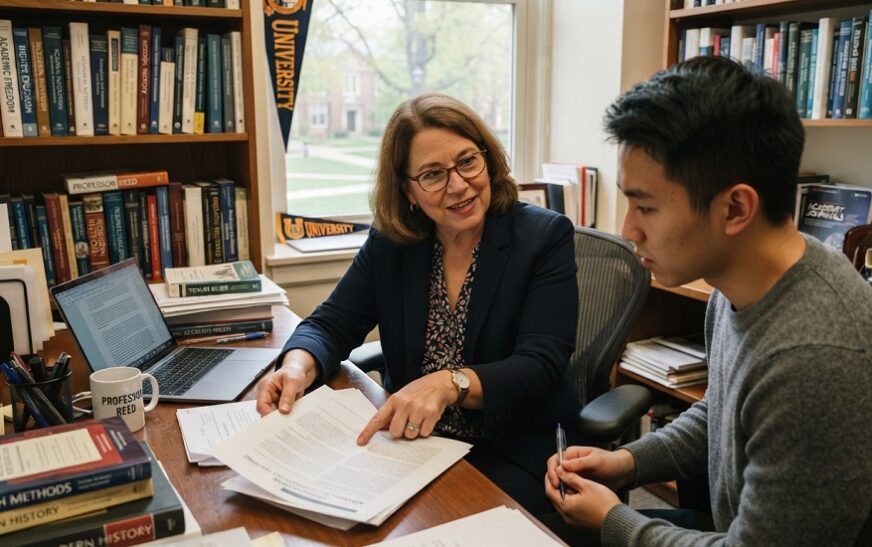


Special education is one of the most important and specialized career areas within the U.S. education system, and for a broader look at the broader education career landscape across all roles and settings, explore our comprehensive education careers guide. Professionals in this field support students with disabilities and other learning, developmental, behavioral, emotional, or physical needs across preschool, elementary, middle, and high school settings.
A special education career can include classroom teaching, individualized education program (IEP) coordination, behavioral support, speech and occupational therapy, instructional assistance, educational psychology, and specialized student services.
The field also offers several routes for professionals who want to work with students with autism or other disabilities without becoming traditional classroom teachers.
According to the U.S. Bureau of Labor Statistics (BLS), special education teachers held approximately 559,500 jobs in 2024 and earned a median annual wage of $64,270 in May 2024. The BLS projects overall special education teacher employment to decline 1% from 2024 to 2034 but still projects approximately 37,800 openings per year, primarily from replacement needs.
Teacher shortages also remain significant across the United States. The Learning Policy Institute’s July 2026 update estimated 387,843 teachers working without full certification for their assignments across the 50 states and Washington, D.C., based on the latest available state data. The report identified shortages through vacancies and teachers serving in assignments without full certification.
What Is a Special Education Career?
Special education careers focus on helping students access education and develop academic, behavioral, social, communication, and life skills.
Professionals may work with students who have:
- Autism spectrum disorders
- Learning disabilities
- Intellectual disabilities
- Emotional or behavioral disabilities
- Speech and language needs
- Physical disabilities
- Multiple disabilities
- Developmental delays
The work can take place in:
- Public schools
- Private schools
- Charter schools
- Special education programs
- Early intervention programs
- Residential facilities
- Hospitals
- Community programs
- Students’ homes
Increasingly, remote teaching and online instruction are creating new opportunities for special education professionals to serve students through telehealth and virtual learning platforms.
The exact responsibilities depend on the professional role and the student’s needs.
Special Education Teacher Jobs
Special education teachers provide specialized instruction and help students access the general education curriculum when appropriate.
Typical responsibilities include:
- Developing instructional plans
- Adapting curriculum
- Monitoring student progress
- Supporting classroom behavior
- Collaborating with general education teachers
- Communicating with families
- Participating in IEP meetings
- Maintaining student documentation
- Working with related-service professionals
BLS reports that 85% of special education teachers worked in local elementary and secondary schools in 2024, making public school districts the dominant employment setting.
Special education teachers may work in self-contained classrooms, resource rooms, inclusion settings, or specialized programs depending on their school and assignment.
Special Education Teacher Salary
The median annual wage for special education teachers was $64,270 in May 2024, according to BLS. The highest 10% earned more than $103,290.
Pay varies by grade level and employment setting.
| Special Education Role | May 2024 Median Wage |
| Secondary school | $69,590 |
| All other special education | $67,430 |
| Middle school | $64,880 |
| Kindergarten/elementary | $63,000 |
| Preschool | $62,190 |
Local public elementary and secondary schools had a reported median wage of $64,960, compared with $58,980 for private elementary and secondary schools.
Actual earnings depend on state salary schedules, experience, education level, district, additional credentials, and local incentives.
Special Education Teacher Shortage in the USA
Special education is one of the areas where schools frequently experience staffing challenges.
National shortage data should be interpreted carefully because shortage definitions differ among states. The Learning Policy Institute’s 2026 analysis uses both vacancies and the number of teachers not fully certified for their assignments as indicators. Its latest scan found 37,569 unfilled teaching positions across the 29 states plus Washington, D.C., that published vacancy data, alongside the much larger national estimate of teachers working without full certification.
Shortages can be influenced by:
- Teacher turnover
- Retirement
- Student enrollment
- Special education service requirements
- Geographic location
- District funding
- Certification requirements
- Difficulty recruiting specialized professionals
For job seekers, this means local school district conditions can be more important than national employment-growth statistics.
Why Special Education Demand Remains Important
Even though BLS projects a 1% decline in overall special education teacher employment through 2034, the occupation is expected to generate tens of thousands of openings each year because existing workers leave the field or retire.
BLS also notes that demand is influenced by school enrollment and the continuing need for special education services.
This creates an important distinction:
Employment growth measures how the total number of jobs changes.
Annual openings measure how many hiring opportunities arise.
A profession can have declining total employment while still providing substantial opportunities for new candidates.
Special Education Certification Requirements
Requirements for becoming a special education teacher are primarily determined by the state where you plan to work.
The U.S. Department of Education states that teacher certification and licensing requirements are determined by state education departments, and there is no single certification accepted in every state. Some states offer reciprocity for out-of-state credentials.
For public-school special education teachers, federal IDEA requirements also establish qualifications for personnel serving students with disabilities. The law generally requires appropriately qualified special education teachers to hold full state certification or licensure, with recognized alternative routes subject to applicable requirements.
Depending on the state and pathway, candidates may need the following:
- Bachelor’s degree
- Approved teacher preparation program
- Special education coursework
- Student teaching or clinical experience
- State examinations
- Background checks
- Special education endorsement
- State teaching license
Candidates should verify requirements directly with their state education agency.
How to Become a Special Education Teacher
A traditional pathway can look like:
- Bachelor’s Degree
- Special Education Teacher Preparation
- Student Teaching / Clinical Experience
- Required State Exams
- Background Check
- State Certification / License
- School District Application
- Special Education Teacher
Career changers may have access to alternative certification pathways depending on the state.
Special Education Teacher Credentialing
Special education credentialing may involve both a general teaching license and a special education endorsement or certification.
The exact structure differs by state.
For example, a state’s credential may specify the following:
- Grade level
- Disability categories
- Subject area
- Instructional setting
- Special education scope
This makes it important to identify the exact population you want to serve before selecting a preparation program.
IEP Specialist Career
An IEP specialist works with schools, educators, families, and service providers to support the development and implementation of Individualized Education Programs.
The role may involve:
- Reviewing student evaluations
- Coordinating IEP meetings
- Monitoring compliance
- Supporting teachers
- Interpreting special education requirements
- Tracking accommodations
- Communicating with parents
- Managing documentation
- Supporting procedural compliance
Job titles can vary, including:
- IEP Coordinator
- Special Education Coordinator
- Special Education Program Specialist
- IEP Specialist
- Special Education Case Manager
Some positions require a teaching license and special education experience, while others may emphasize education administration or specialized compliance expertise.
IEP Coordinator Job
An IEP coordinator often has broader administrative responsibilities than an individual classroom case manager.
Depending on the district, responsibilities can include the following:
- Coordinating multidisciplinary meetings
- Monitoring deadlines
- Supporting case managers
- Reviewing documentation
- Training staff
- Communicating with families
- Supporting compliance
- Coordinating related services
This can be an attractive advancement route for experienced special education teachers who want to move into leadership without immediately becoming a school principal.
Resource Room Teacher
A resource room teacher provides specialized instruction to students who may spend part of the school day in general education settings.
Responsibilities can include:
- Small-group instruction
- Individualized academic support
- Reading intervention
- Mathematics intervention
- Study skills
- Accommodation support
- Progress monitoring
- Collaboration with classroom teachers
The position can provide a middle ground between a fully self-contained special education classroom and a general education classroom.
Special Needs Educator
The term “special needs educator” can encompass several roles supporting students with disabilities.
Professionals may work as:
- Special education teachers
- Resource teachers
- Special education case managers
- Instructional specialists
- Educational aides
- Behavioral support professionals
- Autism specialists
The best career path depends on whether you prefer direct teaching, behavior support, program coordination, or specialized services.
Autism Support Career
Autism-focused careers have become an important part of the broader special education and behavioral-support workforce.
Potential roles include:
- Autism Support Specialist
- Special Education Teacher
- Behavior Technician
- Registered Behavior Technician (RBT)
- Board Certified Behavior Analyst (BCBA)
- Autism Program Coordinator
- Behavioral Interventionist
- Autism Services Consultant
Responsibilities vary substantially between educational, clinical, and behavioral roles.
Some professionals focus primarily on classroom instruction, while others use behavior-analytic approaches or coordinate individualized services.
Autism Spectrum Classroom Jobs
Schools may employ several professionals within autism-support classrooms.
Common roles include:
- Special education teacher
- Paraprofessional
- Behavior specialist
- Behavior technician
- Speech-language professional
- Occupational therapist
- School psychologist
- Instructional assistant
- Classroom aide
These professionals may collaborate to create a coordinated support environment for students.
Behavior Interventionist Career
Behavior interventionists support children who need assistance with behavioral, developmental, or social skills.
The job can involve:
- Implementing behavior plans
- Collecting data
- Teaching replacement behaviors
- Supporting communication
- Reinforcing positive behaviors
- Working under clinical or educational supervision
- Communicating observations to supervising professionals
Requirements vary by employer and jurisdiction. Some positions are entry-level, while others require specialized behavioral training or certification.
BCBA Career
A Board Certified Behavior Analyst (BCBA) is a specialized, credentialed professional working in behavior analysis.
BCBAs may work in:
- Schools
- Autism services
- Clinics
- Behavioral healthcare
- Home-based services
- Community programs
Their responsibilities can include:
- Behavioral assessment
- Treatment planning
- Behavior intervention
- Data analysis
- Staff supervision
- Family consultation
- Program evaluation
BCBA positions differ significantly from special education teaching roles. A teacher’s core responsibility is educational instruction, while a BCBA’s work centers on behavior analysis and interventions within their scope of practice.
Special Education Career Paths
The field provides multiple advancement routes.
Classroom Route
- Paraprofessional
- Special Education Teacher
- Experienced SPED Teacher
- Lead Teacher / Case Manager
- IEP Coordinator
- Special Education Coordinator
Leadership Route
- Special Education Teacher
- Instructional Specialist
- Assistant Principal
- Principal
- District Special Education Director
Behavioral Route
- Behavior Technician / Interventionist
- Behavior Specialist
- BCBA
- Senior BCBA / Clinical or Program Leadership
Related-Services Route
- Education / Health Background
- Professional Training
- School-Based Specialist
- School-Based Advanced Practice / Leadership
Occupational Therapist School Career
Occupational therapists can play an important role in school-based special education services.
School occupational therapists may help students develop or improve skills related to:
- Fine-motor development
- Classroom participation
- Self-care
- Sensory processing
- Functional activities
- Assistive strategies
Unlike special education teachers, occupational therapists are healthcare professionals whose education, licensure, and scope of practice are governed through separate professional requirements.
This makes school-based occupational therapy a strong option for professionals interested in disability services who prefer a healthcare-oriented career.
Paraprofessional to Special Education Teacher Path
Paraprofessionals can gain valuable experience before becoming licensed special education teachers.
A possible route is:
- Paraprofessional
- Classroom Experience
- Bachelor’s Degree / Required Coursework
- Teacher Preparation
- Student Teaching / Clinical Experience
- State Certification
- Special Education Teacher
This pathway can provide an advantage because paraprofessionals already understand school routines, student support, classroom collaboration, and special education environments.
However, paraprofessional experience does not automatically replace the formal licensing requirements established by the state.
Skills for Special Education Professionals
Strong special education professionals often develop:
- Communication
- Patience
- Collaboration
- Data collection
- Classroom management
- Behavioral support
- Curriculum adaptation
- Family communication
- Documentation
- IEP knowledge
- Assistive technology
- Conflict resolution
- Emotional resilience
The ability to collaborate across teachers, families, administrators, therapists, psychologists, and other professionals is particularly important.
Special Education Career Beyond Teaching
Special education experience can transfer into several non-classroom roles.
Potential paths include the following:
- IEP Coordinator
- Special Education Program Specialist
- Behavior Specialist
- Education Consultant
- Instructional Coach
- Curriculum Specialist
- Student Services Administrator
- District Special Education Director
- Autism Program Coordinator
- Education Compliance Specialist
This allows experienced educators to remain connected to disability services while moving into administrative, strategic, or specialized roles.
BCBA Salary and Career Outlook
Board Certified Behavior Analysts (BCBAs) represent a more specialized career path within behavior analysis and autism support.
Unlike special education teachers, BCBAs typically focus on behavioral assessment, intervention planning, data analysis, supervision, and behavior-support programs.
Potential work settings include:
- Public and private schools
- Autism service providers
- Behavioral health organizations
- Clinics
- Home-based services
- Community programs
BCBA compensation varies according to location, experience, employer, caseload, credentials, and work setting. Because BCBA is a professional certification rather than a BLS occupational category, national salary comparisons should be treated carefully.
Candidates interested in this path should distinguish between behavior technician, behavior interventionist, and BCBA positions because education, certification, supervision, and scope of practice differ substantially.
Special Education Career Demand in 2026
Special education remains one of the most persistent teacher-shortage areas in the United States.
The Learning Policy Institute’s July 2026 analysis found that 45 states reported shortages in special education, making it the most frequently reported shortage area among the major subject categories examined. It also identified special education as one of the areas with the deepest shortage positions nationally.
At the national level, the same analysis estimated that 387,843 teachers were working without full certification for their assignments across the 50 states and Washington, D.C. In the states and D.C. that reported vacancies, 37,569 teaching positions were unfilled.
These numbers do not mean every school district has the same hiring conditions. Demand varies by state, disability specialty, grade level, district, and local student population.
Special Education Teacher Job Outlook
The BLS projects overall employment of special education teachers to decline 1% from 2024 to 2034 but still estimates approximately 37,800 openings per year during that period. The projected openings primarily reflect the need to replace educators who leave the occupation or retire.
This is an important distinction for people evaluating a special education career.
A declining employment projection does not mean there are no jobs. It means the total number of positions is not expected to expand substantially. Replacement needs can still create significant annual hiring activity.
Special Education Salary by Career
Special education professionals work across several occupations, so compensation should be compared by role rather than treating all disability-support careers as one job.
| Career | Primary Focus | Compensation Factors |
| Special Education Teacher | Specialized instruction | State, district, experience, degree |
| IEP Coordinator | Program and compliance coordination | District, experience, leadership |
| Resource Room Teacher | Targeted academic instruction | License, district, experience |
| Behavior Interventionist | Behavioral support | Setting, experience, credentials |
| BCBA | Behavior analysis | Certification, setting, experience |
| Occupational Therapist | Functional and educational therapy | Licensure, setting, experience |
| Paraprofessional | Classroom/student assistance | District, experience, local pay scale |
The roles have different educational and regulatory requirements, so compensation should always be evaluated alongside qualification requirements.
Occupational Therapist School Career
School-based occupational therapy is an attractive option for professionals who want to support students with disabilities from a healthcare perspective.
BLS reports a $98,340 median annual wage for occupational therapists in May 2024. The median wage in hospitals was $100,770, although school-based occupational therapists may work under different compensation structures depending on whether they are employed by a district, healthcare organization, or contractor.
A school occupational therapist may work on skills related to:
- Fine-motor development
- Handwriting
- Classroom participation
- Functional activities
- Sensory strategies
- Assistive equipment
- Self-care
- Access to learning environments
This career requires professional occupational-therapy education and licensure rather than a special education teaching credential.
Special Education Teacher vs. Occupational Therapist
The two careers often collaborate but have different professional roles.
| Special Education Teacher | Occupational Therapist |
| Provides specialized instruction | Provides occupational therapy services |
| Focuses on educational goals | Focuses on functional participation |
| Uses educational curriculum | Uses therapy-based interventions |
| Typically requires teacher licensure | Requires OT education and licensure |
| Commonly employed by school districts | May work for districts, hospitals, or contractors |
Someone choosing between these careers should consider whether their primary interest is teaching and education or healthcare and functional development.
Autism Support Career Paths
Autism support is another major specialization within the broader special education ecosystem.
Potential career paths include:
- Paraprofessional / Support Staff
- Behavior Technician / Interventionist
- Behavior Specialist
- BCBA / Specialized Professional
- Program Supervisor
- Clinical or Program Leadership
An alternative educational route is:
- Teacher Preparation
- Special Education Teacher
- Autism Classroom Specialist
- Autism Program Coordinator
- District Special Education Leadership
These pathways allow professionals to specialize without necessarily leaving the education sector.
Working in an Autism Classroom
Autism-focused classrooms can involve multidisciplinary teamwork.
Professionals may collaborate with:
- Special education teachers
- General education teachers
- Paraprofessionals
- Speech-language professionals
- Occupational therapists
- School psychologists
- Behavior professionals
- Families
- Administrators
The work can include individualized instruction, communication support, behavior strategies, life-skills education, and classroom participation.
Because student needs vary substantially, professionals should seek training and supervision appropriate to their specific role.
Paraprofessional Career vs. Special Education Teacher
Paraprofessional roles can be a useful entry point for people exploring special education.
Paraprofessional
Typically provides direct classroom or student assistance under the supervision of qualified professionals.
Special Education Teacher
Usually holds a state-issued teaching credential and is responsible for instruction, assessment, and educational planning.
The paraprofessional route can help candidates determine whether special education is the right career before investing in teacher preparation.
However, experience as a paraprofessional does not automatically substitute for state teacher certification requirements.
IEP Coordinator Career Advancement
Experienced special education professionals can move into IEP and program-coordination roles.
A coordinator may oversee the following:
- IEP compliance
- Meeting schedules
- Documentation
- Staff support
- Parent communication
- Professional development
- State and federal requirements
- Special education programming
This creates a pathway for educators who want less daily classroom responsibility but still want to work directly in special education systems.
Special Education Administrator Career
Another long-term path is district-level administration.
A possible progression is the following:
- Special Education Teacher
- Case Manager / Lead Teacher
- Special Education Coordinator
- District Special Education Administrator
- Director of Special Education
- District-Level Executive Leadership
These roles generally require increasingly substantial experience in special education, leadership, compliance, and program management.
Certifications That Can Strengthen a Special Education Career
The right credential depends on the career target.
A special education teacher may need the following:
- State teaching license
- Special education endorsement
- State-required assessments
- Additional subject endorsements
Behavior-focused professionals may pursue:
- BCBA
- RBT
- Other behavior-related credentials depending on the role and jurisdiction
Healthcare professionals may need the following:
- Occupational therapy licensure
- Speech-language pathology credentials
- Other applicable professional licenses
A credential should always be selected based on the job you want rather than collected simply to strengthen a resume.
Special Education Training and Professional Development
Ongoing professional development can help educators respond to changing student needs.
Useful areas include:
- Autism support
- Assistive technology
- Behavior support
- IEP development
- Differentiated instruction
- Evidence-based instructional practices
- Augmentative and alternative communication
- Positive behavior support
- Inclusive education
- Transition planning
Professional development is particularly useful when it addresses a specific student population or role requirement.
Special Education and Technology
Technology increasingly supports special education through:
- Assistive communication
- Digital learning platforms
- Adaptive instructional tools
- Progress monitoring
- Data collection
- Accessibility technology
- Educational software
Teachers and related-service professionals who understand assistive and educational technology can improve student access while expanding their own professional capabilities.
Where Special Education Professionals Work
Special education careers are available in several settings.
Public Schools
The largest employment environment for special education teachers. BLS reports that 85% of special education teachers worked in local elementary and secondary schools in 2024.
Private Schools
Private schools may employ special education teachers and student-support professionals, although licensing rules can differ.
Charter Schools
Charter schools may have specialized student-support programs and teacher staffing needs.
Early Intervention
Professionals can work with younger children and families before traditional K–12 education.
Clinics and Behavioral Services
Behavior professionals, therapists, and other specialists may work in clinical or community environments.
Contract Services
School districts sometimes use external organizations for therapy, behavioral services, evaluations, or specialized support.
Special Education Career Pros and Cons
Advantages
Special education can provide:
- Strong demand in many locations
- Meaningful student impact
- Multiple specialization options
- Leadership opportunities
- Transferable education skills
- Pathways into administration and related services
Challenges
Potential challenges include the following:
- Documentation workload
- Emotional demands
- Complex student needs
- Collaboration requirements
- Staffing shortages
- High responsibility
- Classroom management challenges
- Risk of burnout
The quality of district support, staffing levels, class size, planning time, and leadership can significantly affect the day-to-day experience.
How to Choose a Special Education Career
Ask yourself:
Do I Want to Teach?
Choose the special education teacher route.
Do I Prefer Behavioral Work?
Explore behavior intervention, behavior analysis, and BCBA pathways.
Do I prefer healthcare?
Consider occupational therapy or other school-based health professions.
Do I Prefer Program Management?
Consider IEP coordination, special education administration, or district leadership.
Do I Want Entry-Level Experience First?
Consider paraprofessional or appropriately supervised support roles.
This approach helps align training investments with the type of work you actually want to perform.
Special Education Career Outlook
Special education should remain an important employment area because schools continue to require qualified personnel to serve students with disabilities.
The 2026 Learning Policy Institute data are particularly notable: special education was reported as a shortage area in 45 states, while every state and the District of Columbia reported shortages in multiple teaching areas.
For individual job seekers, however, national shortage statistics should be treated as a starting point. The actual opportunity depends on the state credential, certification area, district, student population, and local staffing situation.
How to Start a Special Education Career
Starting a special education career requires choosing the right professional track before investing in education or certification. The requirements differ substantially between teaching, behavior analysis, therapy, and support roles.
Step 1: Choose Your Career Direction
Decide whether you want to become primarily a:
- Special education teacher
- Resource room teacher
- IEP specialist or coordinator
- Behavior interventionist
- BCBA
- Paraprofessional
- School-based occupational therapist
- Autism support professional
- Special education administrator
Each pathway has different education, licensing, and certification requirements.
Step 2: Research Your State Requirements
For teaching positions, verify requirements with your state’s education agency.
Check:
- Required degree
- Teacher preparation program
- Special education endorsement
- Required assessments
- Student teaching
- Background screening
- Alternative certification options
- Reciprocity rules
Teacher certification is state-specific, so a credential that works in one state may require additional steps elsewhere.
Step 3: Gain Relevant Experience
Experience can help confirm whether the field is right for you.
Potential starting points include:
- Paraprofessional
- Instructional aide
- Behavioral support role
- Tutor
- Classroom assistant
- Volunteer disability-support programs
This experience can also strengthen future applications and preparation programs.
Step 4: Complete Required Education and Training
Traditional special education teachers commonly complete a bachelor’s degree and an approved preparation program.
Other paths require different education:
BCBA: graduate-level behavior-analysis education and supervised fieldwork under applicable certification requirements.
Occupational Therapist: professional occupational-therapy education and state licensure.
Paraprofessional: Requirements vary by state and employer and are generally less extensive than teacher licensing.
Step 5: Build Specialized Skills
Choose professional development that matches the students and role you want to serve.
Valuable areas include the following:
- Autism support
- Assistive technology
- Behavior intervention
- IEP development
- Differentiated instruction
- Communication support
- Inclusive education
- Positive behavior support
- Transition planning
Specialized expertise can also improve mobility into coordinator and leadership roles.
How to Find Special Education Jobs
School district career websites are among the most important sources for special education vacancies.
Search for titles such as the following:
- Special Education Teacher
- SPED Teacher
- Resource Room Teacher
- Special Education Case Manager
- IEP Coordinator
- Special Education Coordinator
- Autism Specialist
- Behavior Interventionist
- Special Education Paraprofessional
- Instructional Assistant
Also check:
- State education agency job portals
- School district websites
- Charter-school career pages
- Private-school career pages
- Education-specific job boards
- Healthcare organizations for school-based therapy positions
Because shortage conditions vary locally, searching multiple districts can reveal more opportunities than relying on national job sites alone.
How to Compare Special Education Job Offers
Salary should not be the only consideration.
Evaluate:
Caseload
How many students will you be responsible for?
Classroom Size
How many students and support staff are assigned?
Paraprofessional Support
Will aides or instructional assistants be available?
Planning Time
How much protected time is provided for lesson planning and documentation?
IEP Workload
How many students will require case management?
Professional Development
What specialized training does the district provide?
Mentoring
Is there a formal support program for new special education teachers?
Compensation
Compare:
- Base salary
- Degree-level increases
- Experience credit
- Signing incentives
- Retirement
- Healthcare
- Extra-duty pay
Advancement
Ask about pathways into:
- Lead teaching
- Instructional coaching
- IEP coordination
- Program administration
- District leadership
A district offering slightly less salary may still be the stronger career choice if it provides better staffing, manageable caseloads, mentoring, and advancement.
Special Education Burnout and Retention
Special education can be rewarding, but it can also be demanding.
Stress can be influenced by:
- High caseloads
- Documentation requirements
- Staffing shortages
- Behavioral challenges
- Complex student needs
- Family communication
- Administrative demands
- Limited planning time
A national salary number does not capture these working conditions.
Before accepting a position, ask current employees about:
- Staff turnover
- Average caseload
- Substitute coverage
- Paraprofessional availability
- Administrative support
- IEP workload
- Professional development
- Teacher retention
These factors can strongly affect long-term career sustainability.
Special Education Career Advancement
Experienced professionals can move into increasingly specialized or leadership-oriented roles.
A teaching path could become the following:
- Special Education Teacher
- Senior / Lead Teacher
- IEP Coordinator
- Special Education Coordinator
- Assistant Principal
- Principal / Director
A specialist route could become the following:
- Specialized SPED Professional
- Autism / Behavior Specialist
- Program Specialist
- District Specialist
- Director of Special Education
A behavior route could become the following:
- Behavior Technician / Interventionist
- Behavior Specialist
- BCBA
- Senior BCBA / Program Supervisor
- Clinical or Program Leadership
Highest-Value Skills for Special Education Professionals
The strongest professionals often combine educational expertise with specialized technical or leadership capabilities.
Especially valuable skills include:
- IEP compliance
- Data-driven instruction
- Autism support
- Behavior analysis
- Assistive technology
- Family collaboration
- Case management
- Educational assessment
- Staff training
- Program coordination
- Leadership
- Regulatory compliance
Combining a classroom credential with specialized expertise can create more advancement options than remaining focused on one instructional role.
Special Education Certification and Career ROI
A credential should be evaluated based on its ability to create a specific career outcome.
For example:
Teacher certification → qualifies you for licensed special education teaching.
BCBA certification → supports a specialized behavior-analysis career.
Occupational therapy licensure → supports school-based OT and broader healthcare opportunities.
Leadership training → can support movement into coordination and administration.
The goal is not to collect credentials. It is to obtain qualifications that correspond to actual employment opportunities.
When a Special Education Career Is a Good Fit
Special education may be a strong fit for people who:
- Enjoy working closely with students
- Value individualized instruction
- Are patient and adaptable
- Can collaborate across professional teams
- Communicate effectively with families
- Want meaningful public-service work
- Are comfortable with documentation
- Want multiple career advancement routes
It may be less suitable for people who strongly dislike complex case management, behavioral challenges, or extensive collaboration.
Key Takeaways
- Special education offers careers in teaching, behavior analysis, IEP coordination, autism support, paraprofessional services, occupational therapy, and administration.
- Special education teachers had a $64,270 median annual wage in May 2024, with the highest 10% earning above $103,290.
- BLS projects approximately 37,800 special education teacher openings per year from 2024 to 2034 despite a projected 1% decline in total employment.
- Special education remains a significant shortage area; the Learning Policy Institute reported shortages in 45 states in its 2026 analysis.
- School-based occupational therapy provides a healthcare-oriented alternative to special education teaching, with occupational therapists reporting a $98,340 median annual wage in May 2024.
- Career advancement can lead from classroom teaching into IEP coordination, special education administration, behavioral specialization, or district leadership.
- Local working conditions—including caseload, staffing, planning time, and administrative support—should be evaluated alongside salary when choosing a special education job.
Frequently Asked Questions
What is the best special education career?
The answer depends on your interests. Special education teaching is best for direct instructional work, BCBA roles for behavior analysis, IEP coordination for program management, and occupational therapy for professionals interested in healthcare and functional development.
Are special education teachers in demand?
Yes, demand remains strong in many areas. The Learning Policy Institute identified special education as a shortage area in 45 states in its 2026 state analysis.
How much do special education teachers make?
BLS reported a $64,270 median annual wage in May 2024, although actual compensation varies substantially by grade level, state, district, experience, and education.
Can a paraprofessional become a special education teacher?
Yes. Paraprofessional experience can provide valuable classroom exposure, but candidates generally still need to complete the education, preparation, testing, and licensing requirements established by their state.
What is the difference between an IEP coordinator and a special education teacher?
A special education teacher primarily provides instruction and student support, while an IEP coordinator typically has broader responsibility for documentation, meetings, compliance, and program coordination.
Is BCBA a teaching career?
No. A BCBA is a behavior-analysis professional rather than a traditional teacher. BCBAs may work in schools, clinics, homes, or community settings and focus on behavior assessment and intervention.
Can occupational therapists work in schools?
Yes. School-based occupational therapists support students with functional, motor, sensory, and participation-related needs and frequently collaborate with educators and families. Occupational therapy is separately regulated from teacher certification.
Does special education experience lead to school administration?
Yes. Experienced special education teachers can progress into IEP coordination, special education program administration, assistant principal, principal, and district leadership positions.
Conclusion
Special education offers one of the broadest specialization options within the education sector. Professionals can build careers as teachers, resource-room educators, IEP coordinators, behavior specialists, BCBAs, autism-support professionals, occupational therapists, and district administrators.
The field also continues to experience staffing challenges in many parts of the country. While national employment projections do not show rapid overall growth for special education teachers, replacement demand and persistent shortages continue to create opportunities for qualified candidates.
The strongest career strategy is to choose a specific professional path, verify the credential requirements for your state, gain hands-on experience, and develop specialized skills that remain valuable across schools and service organizations. For many professionals, special education can provide both meaningful student impact and a flexible long-term career path.