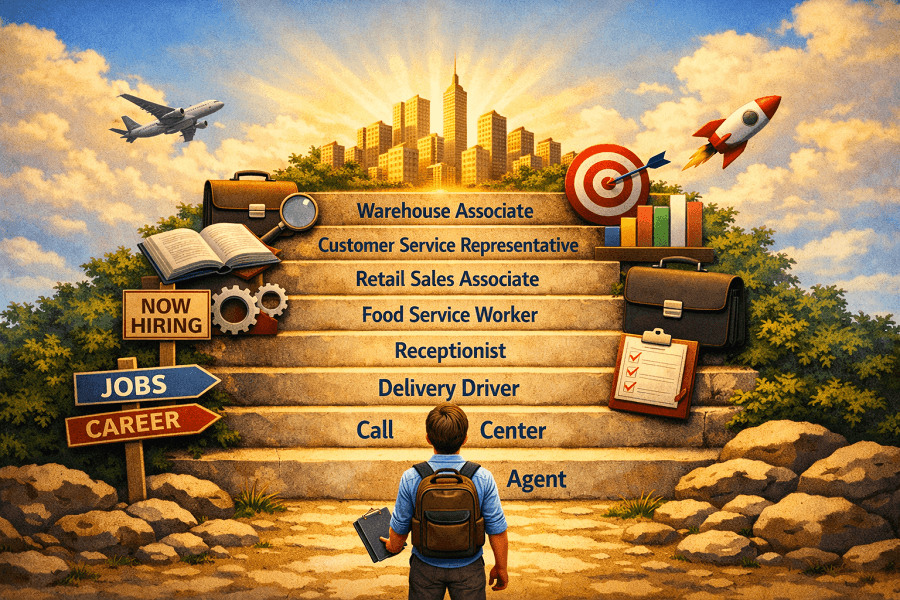


Returning to work after a career break can feel more difficult than leaving the workforce in the first place. Skills may have changed, confidence may have declined, professional networks may have become quieter, and employers may ask questions about the gap.
A career break does not automatically reduce your professional value. The challenge is translating what you did before the break, what you learned during it, and what you can contribute now into a clear employment story.
The strongest workforce re-entry strategy combines realistic target roles, refreshed skills, a focused resume, updated LinkedIn positioning, networking, interview preparation, and a practical explanation for the gap.
This guide covers returning to work after a career break, workforce re-entry, returning after a resume gap, maternity career returns, sabbatical return strategies, return-to-work programs, returnships, skills refreshes, confidence rebuilding, and job searches after extended career gaps.
What Is a Career Break?
A career break is a planned or unplanned period when someone temporarily steps away from paid employment.
Reasons can include:
- Parenting
- Caregiving
- Health or recovery
- Education
- Travel
- Personal responsibilities
- Burnout recovery
- Relocation
- Military or public service
- Sabbatical
- Job loss followed by an extended search
The reason for the break matters less than what the professional is prepared to do next.
Career Break vs Sabbatical
The terms are sometimes used interchangeably, but there can be a useful distinction.
A career break is a broader period away from employment that may have an open-ended or personal purpose.
A sabbatical is often a planned temporary absence from a specific employer or career, sometimes with an agreed return.
A professional can take a career break without remaining attached to an employer.
A sabbatical is more likely to have a defined beginning and end.
Returning to Work After Career Break
The return process should usually happen in stages:
Assess → Refresh → Reposition → Network → Apply → Interview → Re-enter
Do not start by applying to hundreds of jobs.
First determine what the market expects and whether your previous skills still match your target roles.
Workforce Re-Entry
Workforce re-entry means returning to paid employment after a period outside the workforce.
The strongest re-entry plans answer:
- What role do I want?
- What skills do I still have?
- What changed while I was away?
- What needs refreshing?
- How will I demonstrate current capability?
- Which employers are open to career-return candidates?
Returning to Work After a Long Gap
A long gap can create additional questions, but it does not need to become the center of your application.
Instead, focus on:
- Relevant achievements
- Transferable skills
- Recent learning
- Current tools
- Projects
- Certifications
- Professional relationships
A two-year gap should not overshadow ten years of relevant experience.
Back to Work After a Two-Year Gap
A two-year gap may require more deliberate skills refresh and market reorientation.
Start by reviewing current job postings for your target role.
Look for:
- Required software
- Certifications
- Industry terminology
- New workflows
- AI tools
- Technical skills
Then identify which changes actually matter for the jobs you want.
Job Search After a 2-Year Gap
A focused re-entry search can use the following:
- Former colleagues
- Professional associations
- Recruiters
- Returnship programs
- Direct employer applications
- Networking events
- Contract work
Networking can be particularly useful because trusted contacts already understand your previous capabilities.
Resume Employment Gap Explanation
A career gap does not require an elaborate explanation.
Examples include:
Career Break for Family Caregiving
Professional Sabbatical
Full-Time Caregiving
Career Break for Education and Professional Development
Planned Career Break
Keep the explanation accurate and concise.
Resume Gap Explanation Strategy
The basic formula is:
Reason for break + relevant activity + readiness to return
For example:
“Career break for family caregiving from 2023 to 2025. Maintained professional development through industry coursework and volunteer project work. Now seeking full-time operations roles.”
Do not invent employment during the gap.
Should You Hide a Career Gap?
Usually, no.
Trying to disguise a gap can create confusion during background checks or interviews.
A better strategy is to explain it briefly and move attention toward the following:
- What you accomplished before the break
- What you learned during it
- Why you are ready now
Resume Format After a Career Break
A chronological resume can still work well.
You can also use:
- A strong summary
- Core skills section
- Selected achievements
- Recent training
- Relevant projects
Do not overload the resume with a large explanation of the gap.
Your current capabilities should remain the focus.
Career Break Resume Example
A useful structure could be:
Operations Manager | Process Improvement | Supply Chain
Then:
Core Skills
Operations, process improvement, project leadership, analytics
Then:
Professional Experience
Relevant previous positions and achievements
Then:
Career Break
2023–2025: Family caregiving and professional development
Then:
Recent Training
Relevant certifications or coursework
This keeps the gap visible without making it the dominant feature.
LinkedIn Career Break Feature
LinkedIn provides a dedicated career break feature that allows members to add a career break entry to their profile and select a reason such as
- Full-time parenting
- Family caregiving
- Health and well-being
- Career transition
- Relocation
- Travel
- Full-time education
- Personal goal
- Other
Using a career-break entry can provide useful context while keeping your broader professional experience intact.
LinkedIn Career Break Strategy
Update:
- Headline
- About section
- Experience
- Career-break section
- Skills
- Certifications
- Featured work
The headline should usually focus on the role you want next rather than emphasizing that you were away from work.
LinkedIn Career Return Example
Instead of:
“Returning to Work After 3 Years Away”
Consider:
“Operations Professional | Process Improvement | Project Management | Supply Chain”
Then explain the career break appropriately within the profile.
Skills Refresh After Career Break
Skill refresh should be targeted rather than exhaustive.
Review current job postings and divide requirements into the following:
Still Strong
Skills you can demonstrate immediately.
Needs Refresh
Skills you used before but have not practiced recently.
New
Skills introduced while you were away.
Focus most of your time on the second and third categories.
Skills That Commonly Change During a Career Break
Depending on your profession, changes may involve the following:
- Software
- Data tools
- AI-assisted workflows
- Regulations
- Industry terminology
- Digital collaboration
- Security practices
- Reporting systems
Technology changes faster in some industries than others.
The goal is to become current enough for the roles you are targeting, not to master every new tool.
Skills Refresh Plan
Use:
Job descriptions → Skill gap → Learning resource → Practical evidence
For each missing skill, ask:
- Is it required?
- How long will it take to refresh?
- Can I demonstrate it through a project?
- Is a certification actually necessary?
This prevents unnecessary retraining.
Return to Work Programs USA
Some employers and workforce organizations offer structured programs designed to support professionals returning after career breaks.
These may be called:
- Returnships
- Return-to-work programs
- Career re-entry programs
- Professional re-entry initiatives
Availability changes by employer, industry, and year.
Search individual company career pages for current eligibility and program dates rather than relying on old program lists.
What Is a Returnship?
A returnship is a structured professional re-entry opportunity designed for people who have taken an extended career break.
Programs may provide:
- Paid work experience
- Mentoring
- Training
- Networking
- Skills refresh
- Potential full-time conversion
Returnships can reduce employer uncertainty by providing current evidence of capability.
Returnship vs Internship
A returnship is generally designed for experienced professionals returning after a career break.
An internship is usually designed for students or early-career workers gaining initial experience.
For someone with years of prior professional experience, a returnship can be a more appropriate bridge than starting from an entry-level internship.
Returnship Programs at Large Companies
Some large organizations have created returnship or career-return initiatives over the years, including programs associated with companies such as IBM, Deloitte, and others.
Programs change frequently, so candidates should verify:
- Current availability
- Location
- Eligibility
- Program length
- Paid status
- Conversion opportunities
- Required experience
Do not assume a previously advertised program remains open.
IBM Returnship
IBM has previously operated professional return-to-work initiatives designed to help experienced workers re-enter technology and professional careers.
Because programs and application windows can change, candidates should check IBM’s current careers site for active returnship or career-reentry opportunities.
Deloitte Returnship
Deloitte has also offered career-return initiatives in certain markets and periods.
Current opportunities, eligible backgrounds, and program formats can change, so applicants should verify current information directly through Deloitte’s careers channels.
Returnship Benefits
A strong returnship can provide the following:
- Recent experience
- Professional references
- Current skills
- Employer credibility
- Networking
- A smoother explanation of the career gap
The key question is whether the program leads to meaningful work and a realistic path forward.
Returnship Selection Strategy
When comparing programs, evaluate:
- Paid compensation
- Role relevance
- Training
- Mentorship
- Conversion rate or hiring pathway
- Program length
- Location
- Remote flexibility
- Benefits
A prestigious program with little relevance to your target career may be less useful than a smaller program with strong job alignment.
Back to Work After Maternity
Returning after maternity leave or a longer parenting break can involve both professional and personal adjustments.
Common concerns include:
- Confidence
- Childcare
- Schedule flexibility
- Career progression
- Professional identity
- Skills refresh
You do not need to apologize for taking time away for caregiving.
The focus should be on your current capability and the role you are ready to perform.
Maternity Career Return Resume
A maternity-related career break can be described simply:
Career Break: Full-Time Parenting
Then emphasize:
- Prior professional achievements
- Recent training
- Current skills
- Projects
- Volunteer leadership where relevant
Do not turn the resume into a personal essay about parenting.
Returning to Work After Parenting
Start with the work model that fits your current life.
Options may include:
- Full-time
- Part-time
- Hybrid
- Remote
- Contract
- Consulting
- Freelancing
A temporary flexible arrangement can sometimes provide an easier bridge into full-time employment later.
Returning After a Sabbatical
Professionals returning after a planned sabbatical should focus on:
- Why the break was taken
- What was accomplished
- What was learned
- Why the timing is right to return
A sabbatical can become a positive part of the career story when it is explained confidently and accurately.
How to Explain a Sabbatical in an Interview
A useful answer can be
“I took a planned sabbatical to focus on personal priorities and professional development. During that period I completed relevant coursework and kept current with developments in my field. I am now ready to return to a full-time role.”
Keep the answer concise unless the interviewer asks for more detail.
Confidence Returning to Work
Confidence often returns through evidence rather than motivation alone.
Start by:
- Completing a current project
- Updating a certification
- Talking to professionals
- Practicing interviews
- Rebuilding a professional routine
- Applying for realistic roles
Each completed step provides evidence that you are still capable.
Career Confidence After a Long Gap
Avoid comparing yourself to people who never left the workforce.
Your experience should be evaluated based on:
- Skills
- Results
- Learning ability
- Current readiness
- Target-role fit
A career break changes your timeline, not necessarily your professional value.
Returning to Work Anxiety
Common concerns include:
- “My skills are outdated.”
- “Employers will judge the gap.”
- “I cannot compete with younger candidates.”
- “I have forgotten everything.”
These fears can be tested through evidence.
Review actual job descriptions and talk with recruiters or hiring managers.
You may discover that more of your experience remains relevant than you expected.
Confidence Building Through Small Wins
Use a staged approach:
Step 1
Update your resume.
Step 2
Complete one skills-refresh project.
Step 3
Talk to one former colleague.
Step 4
Apply to one well-matched role.
Step 5
Practice one interview.
Small wins reduce the psychological barrier to re-entry.
Workforce Re-Entry After Caregiving
Caregiving can involve:
- Parenting
- Elder care
- Supporting a family member
- Household responsibilities
The employment gap should not be treated as evidence of inactivity.
You may have developed: - Time management
- Organization
- Conflict resolution
- Scheduling
- Budget management
- Negotiation
These skills may be relevant, although they should not replace professional evidence when job-specific credentials are required.
Career Break and Volunteer Work
Relevant volunteer work can help create current evidence.
Examples include:
- Nonprofit project management
- Community leadership
- Professional association work
- Event organization
- Board service
- Technical volunteering
Choose projects related to your target field when possible.
Career Break and Freelancing
Freelancing can be an effective bridge because it provides:
- Recent work
- Current references
- Portfolio evidence
- Flexible hours
- A gradual return
The work should be genuine and accurately represented.
Career Break and Contract Work
Contract assignments can help re-establish the following:
- Recent employment history
- References
- Current tools
- Professional confidence
Contract work can also expose you to newer industry practices before committing to a permanent role.
Career Break Networking Strategy
Reconnect with:
- Former colleagues
- Former managers
- Alumni
- Professional associations
- Industry peers
- Recruiters
Do not begin every message with an apology for the gap.
Lead with your professional background and what you are targeting.
Networking Message After Career Break
A concise message can be
“I am preparing to return to full-time work after a career break and am targeting project-management roles in technology. My previous background includes leading cross-functional implementations, and I have recently refreshed my skills in current project tools.”
The objective is to make the request easy to understand.
Networking Before the Job Search
Start networking before applying heavily.
Informational conversations can help you discover:
- Current hiring trends
- Skill expectations
- Companies that value experienced candidates
- Returnship opportunities
- Hidden roles
You can then target applications more intelligently.
Recruiters and Career Gaps
Recruiters may focus on:
- Relevant experience
- Current skills
- Availability
- Target role
Do not assume every recruiter will reject a career gap.
A clearly explained break with strong prior experience and recent skills can still be compelling.
Career Break and Applicant Tracking Systems
Applicant tracking systems may prioritize:
- Job titles
- Keywords
- Skills
- Certifications
- Relevant experience
Use the language employers use in current job postings.
Do not replace relevant professional experience with a long explanation of your career break.
Resume Keywords After a Career Break
Match the target role’s terminology for:
- Tools
- Skills
- Methods
- Certifications
- Functional responsibilities
This improves relevance while keeping your resume truthful.
Career Break Portfolio
A portfolio can demonstrate current capability.
Possible content:
- Recent projects
- Case studies
- Certifications
- Writing
- Presentations
- Analysis
- Volunteer work
- Freelance work
A recent project can help an employer see what you can do today.
Returning to Technology After a Career Break
Technology professionals may face faster skill changes.
Prioritize:
- Current platforms
- Cloud tools
- Security practices
- AI workflows
- Modern development methods
- Current certifications where relevant
Create practical evidence instead of relying entirely on old experience.
Returning to Finance After a Career Break
Finance professionals may need to refresh the following:
- Current regulations
- Reporting standards
- Financial systems
- Data tools
- Relevant certifications
Check whether your professional license or credential requires continuing education.
Returning to Healthcare After a Career Break
Some healthcare careers have licensing, credentialing, or continuing-education requirements.
Before applying, verify:
- License status
- Continuing education
- Registration
- Employer-specific requirements
A career gap can be manageable, but regulated careers may have additional re-entry steps.
Returning to Skilled Trades After a Career Break
Trade careers may require the following:
- License renewal
- Continuing education
- Safety certifications
- Current practical skills
Hands-on practice can help rebuild confidence before returning to full-time field work.
Career Break and Age
A career gap later in life can create additional concerns about age bias.
Reduce uncertainty by emphasizing:
- Recent learning
- Technology skills
- Adaptability
- Current results
- Relevant experience
Do not apologize for accumulated experience.
Career Break and Salary Expectations
Do not assume your previous salary should be your automatic target.
Compare:
- Current market
- Target role
- Experience
- Recent skills
- Industry
- Benefits
A temporary adjustment may be reasonable, but do not accept a major reduction without understanding the long-term career economics.
Career Break and Flexible Work
Flexibility can be especially valuable during workforce re-entry.
Potential arrangements include the following:
- Hybrid
- Remote
- Flexible start times
- Reduced schedules
- Four-day schedules
- Part-time
- Contract work
The availability of these arrangements depends on employer and role.
Flexible Return-to-Work Request
When requesting flexibility, propose the following:
- Schedule
- Deliverables
- Availability
- Communication method
- Review period
For example:
“I would like to return on a hybrid schedule for the first three months while maintaining full responsibility for project deadlines and core meetings.”
A concrete plan is easier to evaluate.
Back to Work After a Career Gap Without Experience Loss
Your prior experience does not disappear during a break.
What can change is its market relevance.
That is why the strongest return strategy combines the following:
Previous experience + current evidence
Career Break and Professional Identity
Leaving employment can change how you describe yourself.
A career break may create the feeling
“I am no longer a professional.”
That is usually a sign of identity disruption rather than loss of capability.
Your professional identity can be rebuilt through:
- Current work
- Skills
- Relationships
- Results
Career Break and LinkedIn Networking
Use LinkedIn to:
- Reconnect with former colleagues
- Follow target employers
- Join professional communities
- Share relevant insights
- Highlight recent learning
You do not need to post constantly.
A complete and credible profile matters more than daily activity.
Job Search After Career Break
Use a targeted funnel:
Research → Networking → Applications → Interviews → Offers
Track:
- Applications
- Referrals
- Interviews
- Rejections
- Offers
If you receive no interviews, adjust the resume or targeting.
If you receive interviews but no offers, improve interview preparation.
Career Re-Entry Interview Questions
Expect questions such as:
“Why did you leave the workforce?”
“What did you do during the break?”
“Why are you returning now?”
“How have you kept your skills current?”
“Why are you interested in this role?”
Prepare concise, confident answers.
How to Answer Career Gap Questions
Use:
Reason + Productive Context + Readiness
Example:
“I took a planned career break to care for a family member. During the break I completed professional training and kept current with my industry’s technology. I am now ready to return to a full-time project-management role.”
Do not overexplain private details.
Career Gap Interview Mistakes
Avoid:
- Apologizing
- Becoming defensive
- Giving excessive personal information
- Pretending the gap did not happen
- Claiming skills you cannot demonstrate
- Talking only about the break instead of the role
Move the conversation toward what you can contribute today.
Back to Work After Career Break Interview Strategy
Prepare five stories:
- Major accomplishment before the gap
- Challenging problem you solved
- Leadership example
- Recent skills development
- Why you want this role now
This gives interviewers a broader picture than the gap itself.
Career Re-Entry and Salary Negotiation
Do not stop negotiating simply because you are returning after a break.
Base the conversation on:
- Role level
- Relevant experience
- Market range
- Current skills
- Total compensation
The gap may influence employer perception, but your previous experience and current evidence remain valuable.
Career Break and Benefits
When comparing offers, Evaluate:
- Health insurance
- Retirement contributions
- Paid leave
- Flexible work
- Disability coverage
- Life insurance
- Bonus
- Equity
Benefits can materially affect the value of the return-to-work opportunity.
Career Re-Entry and Employer Culture
Look for employers that:
- Discuss career breaks openly
- Value experienced candidates
- Offer flexible work
- Provide structured onboarding
- Have clear performance expectations
- Support professional development
A supportive re-entry environment can make the transition much easier.
Career Return Onboarding
Do not expect yourself to remember everything immediately.
Build a return-to-work ramp:
First Month
Learn systems and current priorities.
Second Month
Take ownership of core responsibilities.
Third Month
Look for opportunities to add value beyond the basics.
The pace will depend on the role.
Career Re-Entry Success
Measure success through:
- Skill confidence
- Work performance
- Professional relationships
- Role stability
- Career satisfaction
- Compensation
A return to work is successful when the career becomes sustainable again, not simply when a job offer is accepted.
Career Break Return Timeline
A realistic re-entry may take
Preparation
Several weeks of research and skills refresh.
Reconnection
Several weeks of networking.
Search
Multiple weeks or months of applications and interviews.
Re-entry
A ramp-up period after accepting a role.
There is no universal timetable.
A two-year gap does not imply a two-year search.
Common Career Re-Entry Mistakes
Avoid:
- Applying before understanding the market
- Trying to relearn everything
- Hiding the gap
- Apologizing for caregiving
- Applying only through job boards
- Ignoring returnship programs
- Accepting a poor-fit role out of fear
- Failing to update LinkedIn
- Overexplaining personal circumstances
- Assuming older experience is enough without refreshing skills
Career Break Return Checklist
- Define target roles.
- Review current job requirements.
- Identify skills that need refreshing.
- Complete relevant recent learning.
- Update resume.
- Update LinkedIn.
- Add career-break context if useful.
- Contact professional connections.
- Research returnship opportunities.
- Prepare career-gap interview answers.
- Build recent portfolio evidence.
- Apply strategically.
- Practice interviews.
- Compare offers by total compensation.
Key Takeaways
- Returning to work after a career break is a workforce-reentry process, not a complete restart.
- The strongest candidates combine prior professional experience with evidence of current capability.
- A career gap should be explained honestly and briefly rather than hidden or overexplained.
- LinkedIn’s Career Break feature can provide context for time away from employment without making the gap the center of the professional profile.
- Returnships can provide recent experience, mentoring, networking, and a potential path back into permanent employment.
- Programs at large companies can change frequently, so candidates should verify current opportunities directly through employer career pages.
- Skills refresh should be targeted to the actual jobs you want rather than based on trying to relearn an entire profession.
- Back-to-work candidates can use freelance work, contract assignments, volunteering, certifications, and projects to create recent evidence.
- Returning after maternity leave or caregiving does not require apologizing for the career break.
- A sabbatical and a career break are related but not identical; the key is explaining the purpose and the readiness to return.
- Confidence often returns through small professional wins, current projects, networking, and interview practice rather than through motivation alone.
- A long employment gap does not automatically make someone uncompetitive, especially when prior experience remains relevant and current skills are demonstrated.
- Flexible work arrangements can make workforce re-entry easier when the role and employer support them.
- The strongest return-to-work strategy is assess → refresh → reposition → network → apply → interview → re-enter.
Frequently Asked Questions
How do I return to work after a career break?
Identify your target role, refresh the skills that have changed, update your resume and LinkedIn, reconnect with your network, build current evidence, and apply strategically.
How do I explain a career gap on my resume?
Use a concise and accurate label such as “Career Break for Family Caregiving” or “Professional Sabbatical,” then move attention toward your skills, experience, and recent development.
Should I hide a two-year employment gap?
Usually not. A clear explanation is more credible than trying to disguise the gap.
How do I explain a career break in an interview?
Use a brief structure: reason for the break, relevant activity during the period, and why you are ready to return now.
Does a career break hurt your chances of getting hired?
It can create employer questions, but the effect varies by industry, role, gap length, experience, and current skills. Strong positioning and recent evidence can reduce uncertainty.
What are returnship programs?
Returnships are structured re-entry opportunities for experienced professionals who have taken a career break. They may include training, mentoring, real work, and potential full-time opportunities.
Are returnships paid?
Many professional returnships are structured as paid positions, but terms vary by employer and program. Always check the current program details.
Does IBM offer return-to-work programs?
IBM has operated professional return initiatives in the past. Current eligibility and openings can change, so verify active opportunities through IBM’s current careers information.
Does Deloitte offer returnship programs?
Deloitte has offered career-return initiatives in various markets and periods. Current programs and eligibility can change, so candidates should check Deloitte’s current careers pages.
What should I put on LinkedIn after a career break?
Update your headline, About section, skills, experience, certifications, and relevant projects. LinkedIn also provides a Career Break profile option that can provide context.
How can I rebuild confidence after a long career break?
Use small, measurable steps such as refreshing one skill, completing a project, reconnecting with a colleague, practicing interviews, and applying for a realistic role.
Should I take a lower-paying job when returning after a career break?
Not automatically. Evaluate market pay, your relevant experience, benefits, growth potential, and the long-term financial effect before accepting a significant reduction.
Is part-time work a good way to return?
It can be a useful bridge when your circumstances require flexibility or when you want to rebuild confidence gradually.
Can freelancing help after a career break?
Yes. Genuine freelance work can create current experience, portfolio evidence, references, and a flexible transition back into the workforce.
How long does it take to return to work after a career break?
There is no standard timeline. Your industry, seniority, target role, location, skills, network, and gap length all affect the process.
How do I return to work after maternity leave?
Update your professional materials, identify your preferred work arrangement, refresh relevant skills, reconnect with your network, and target employers with policies that fit your current needs.
What is the difference between a career break and a sabbatical?
A career break is a broader period away from paid work. A sabbatical is often a planned temporary absence from an employer or career with a defined return arrangement.
Can I return to a completely different career after a career break?
Yes. Identify transferable skills, compare them with the target role, close critical skill gaps, and use projects or training to prove your new capability.
Should I use a career coach after a long employment gap?
A coach can help with positioning, accountability, interview preparation, and transition planning. Evaluate the coach based on a specific outcome rather than generic promises.
Conclusion
Returning to work after a career break can feel like starting over, but it usually is not.
You already have:
- Previous experience
- Professional knowledge
- Transferable skills
- Relationships
- Accomplishment
The market may require some updating, but you are not beginning from zero.
The first step is defining the destination.
Do not start by asking the following:
“What jobs will take me?”
Ask:
“What role do I want to return to, and what does that market currently require?”
Then compare your current capability with today’s requirements.
Some skills will still be strong.
Some will need refreshing.
Some may be new.
Focus your effort on the gaps that actually affect employability.
Your resume should acknowledge the career break without apologizing for it.
Your LinkedIn profile should emphasize the professional identity you are building now.
Your interview explanation should be concise, honest, and forward-looking.
A career break can exist for many legitimate reasons:
- Parenting
- Caregiving
- Health
- Education
- Travel
- Relocation
- Personal priorities
None of these automatically erase previous professional achievements.
Returnships can provide another route back, particularly for experienced professionals who want structured re-entry, recent work, and employer support.
Large companies and professional organizations may offer such programs, but availability changes frequently, so current program information should always be checked directly.
Confidence is another important part of re-entry.
Do not wait until you feel completely confident.
Build confidence through evidence.
Refresh one skill.
Complete one project.
Reconnect with one colleague.
Practice one interview.
Submit one strong application.
Then repeat.
For professionals returning after maternity leave or caregiving, the transition may also involve new requirements outside the workplace.
Flexible schedules, hybrid work, part-time employment, contract work, and phased returns can sometimes create a more sustainable bridge.
The goal is not simply getting back into employment.
It is getting back into work in a way that fits the career and life you have now.
The strongest reentry sequence is
Assess → Refresh → Reposition → Network → Apply → Interview → Re-enter
A career break changes your professional timeline.
It does not have to define your professional future.