

Gen Z is transforming the traveling world. Gen Z travelers are more concerned with meaning, balance, and experience as opposed to time in the past, when the focus was on checking destinations off the list. To them, traveling is not about having to run through the various attractions, but about a connection with a place. This attitude has led to slow travel, which is a trend that gives importance to depth rather than speed. It is also significant to understand the reason behind the adoption of slow travel in Gen Z, since this generation is determining the future of the world travel sector.
What Is Slow Travel?
Slow travel is a mindful approach to exploring destinations by spending more time in fewer places. Its core principles include cultural immersion, sustainability, and meaningful experiences. Unlike conventional tourism, where tourism dwells on tour schedules and traveling fast, slow travel urges the traveler to experience the way locals live. Some of the common behaviours comprised prolonged periods of stay, walking or using the transport system, buying locally, and focusing on experiences rather than landmarks. Rather than experiencing it all, slow travelers prefer to know a place, which leaves a greater impact on them and lowers the level of travel stress.
Who Is Gen Z as a Travel Generation?
Gen Z is said to be experience-oriented, value-driven, and digitally conscious. Mental well-being, authenticity, and social impact influence their travel choices. Although they are highly affected by online services, they want to have physical experiences, which are authentic and intimate. Gen Z cares about budget, yet purpose. Most of them enjoy the flexibility of traveling plans that give an opportunity to develop personally, be creative, and be in touch. Traveling to them is not merely something leisurely, but it is also a form of learning, a form of reflection, and an identity.
Key Causes Behind the Rise of Slow Travel Among Gen Z
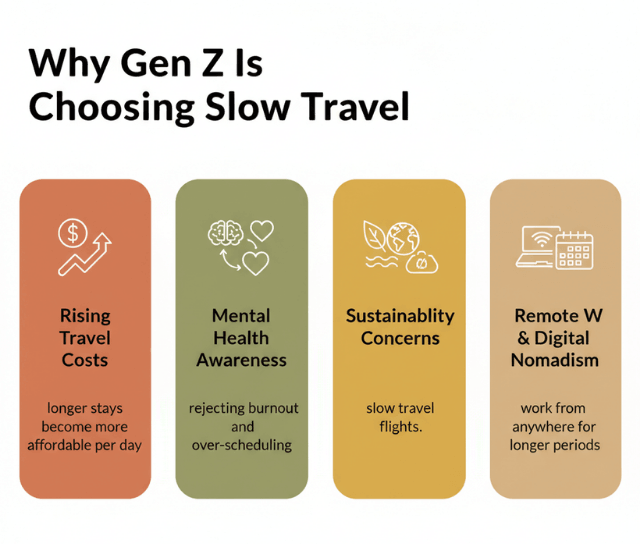
There are various reasons why slow travel is so appealing to the Gen Z generation. The increase in travel expenses makes it impossible to afford a trip more often and to afford fancy travel, compelling them to choose longer stays that are more affordable. Mental health awareness is another factor because Gen Z is the active group that does not engage in burnout and over-scheduling. Another significant reason is sustainability; fast tourism cannot be sustainable due to its effect on climate issues. Online education and remote work are both flexible and give the opportunity to stay longer. Lastly, social media enhances sincerity, and thus, the gradual purposeful travel is more attractive than haste-driven travel that is photo-based.
How Slow Travel Fits Gen Z Lifestyles
The idea of slow travel is also consistent with Gen Z’s way of life. Most of them would rather remain in a single destination instead of moving across cities. This enables more local immersion in food, culture, and daily activities. It is particularly appealing when it comes to community-based experiences, like volunteering, workshops, or regional events. Gen Z also prefers rentals, hostels, and co-living rooms that promote socialization and affordability. These alternatives are flexible, connected, and comfortable, which are in line with their need to balance and not luxury.
How Gen Z Is Practicing Slow Travel
Gen Z practices slow travel in highly deliberate manners. In case they have an option, they prefer taking a train or a bus as opposed to a flight in order to minimize the damage to the environment and have fun on the way. They also patronize local cafes, markets, and crafts, and not chains. Other experiences, such as cooking lessons, strolls through the culture, or creative retreats, can be more important than sightseeing. Gen Z travelers connect with the destinations on a deeper emotional level because they concentrate on the everyday, as opposed to the most popular attractions.
Impact on the Travel & Tourism Industry
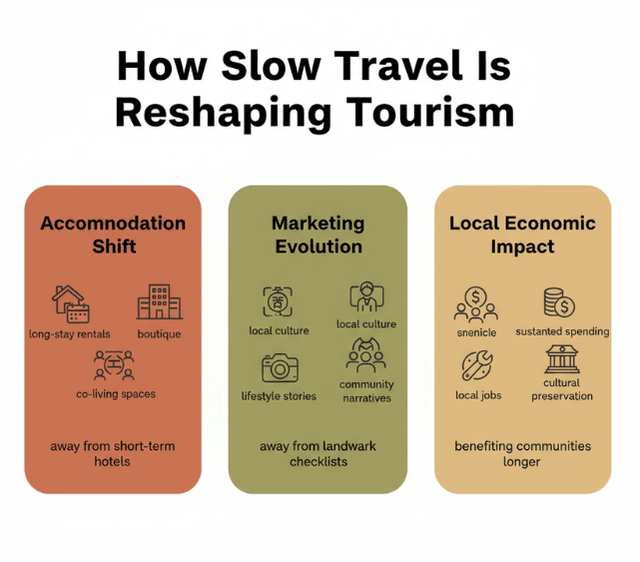
The travel industry is being compelled to change by the emergence of slow travel. The demand for accommodation is moving to long-stay rentals, boutique hostels, and co-living rooms instead of short-term stay hotels. The destination marketing is evolving as well and is more oriented towards culture, lifestyle, and local narratives than landmarks. To the regional economies, slow travel has opportunities in terms of sustained spending, employment, and cultural preservation. Places that adopt this trend would be able to enjoy more responsible and sustainable growth of tourism.
Challenges and Criticisms of Slow Travel
In spite of the advantages, slow travel does not pass without difficulties. Time constraints result in the inaccessibility of people with strict jobs or obligations. You also have the question of privilege, where not everybody may afford to travel slowly, even though it may be cheaper in theory. Also, there is a misuse of sustainability messages by some brands, which raises the issue of greenwashing. These denunciations demonstrate that more accommodating and sincere strategies should be utilized to encourage slow travelling.
FAQs
Is slow travel only for people with flexible jobs?
Mostly yes, but even short trips can follow slow travel principles by focusing on fewer activities and more profound experiences.
Is slow travel actually more sustainable?
It can be, especially when it reduces flights, supports local businesses, and encourages mindful consumption.
How is Gen Z influencing travel trends overall?
Gen Z is pushing travel toward authenticity, sustainability, digital storytelling, and experience-based tourism.
Will slow travel replace traditional tourism?
No, but it will coexist and influence how destinations and businesses design travel experiences.
How can destinations attract Gen Z, slow travelers?
By promoting local culture, affordable extended stays, sustainability efforts, and community-based experiences.
Conclusion
The increase of slow travel among Gen Z is indicative of more generational values of purpose, balance, and responsibility. This is a negative trend that indicates that travelling is no longer a hustle to see the world in a short time, but rather a process of knowing the world intelligently. To the future of travel, slow travel represents a move to more human, sustainable, and meaningful travel, one in which Gen Z desires to live, work, and explore the world.
Leave a Reply